Direct Source for Custom Red Light Therapy Mask | Full OEM/ODM
We are a certified factory specializing in professional-grade beauty tech – from Photon Beauty Face Masks to Handheld Photonic Beauty Wands. ✅ Fast delivery – streamlined production & logistics ✅ Medical-grade compliance – ISO13485, MDSAP, BSCI ✅ High-level customization – design, spectrum, materials, branding No middlemen. Just reliable B2B manufacturing for serious brands.
Red Light Therapy Certifications CE FDA UKCA and RoHS What They Mean for Your Brand
Why Certifications Matter in Red Light Therapy
Selling red light therapy devices across borders means dealing with different regulatory bodies. Each market has its own rules about what can be imported, sold, and marketed. Understanding these requirements before you start sourcing saves you from customs delays, legal trouble, and expensive redesigns later.
Every certification serves a different purpose. Some prove the device is electrically safe. Others confirm the materials are non-toxic. A few exist purely for market access you cannot sell in certain countries without them. This guide breaks down the four most common certifications for red light therapy devices and what each one actually requires.
CE Marking for the European Market
CE marking is required for any red light therapy device sold in the European Union. It indicates that the product meets EU safety, health, and environmental protection standards. For LED-based devices, this usually falls under the Low Voltage Directive and the Electromagnetic Compatibility Directive.
The certification process involves testing the device in an accredited lab. The lab checks electrical safety, emission levels, and whether the device interferes with other electronics. Most red light therapy masks and belts fall into a lower risk class, which means the manufacturer can self-declare compliance after testing. Higher-risk devices may require involvement from a notified body.
Manufacturers with existing CE certification for their base designs can add your branding without re-running the full test. This is one reason working with an experienced OEM partner saves time. Skifir holds CE certification for its core product lines, which streamlines the process for private label partners entering the European market.
FDA Registration for the United States
The FDA regulates red light therapy devices as general wellness products or medical devices depending on the claims you make. If you market the device for general wellness like relaxation or minor pain relief, it typically qualifies as a low-risk product requiring only FDA establishment registration and device listing.
If you make specific medical claims treating a condition or disease the device may be classified differently and require 510(k) clearance. Most consumer red light therapy brands stick to wellness claims to avoid the longer and more expensive 510(k) pathway.
FDA registration is not a one-time task. You need to renew it annually and update your device listing if you change the design or add new models. Budget for this recurring cost when planning your product roadmap.
Since the UK left the EU, a separate UKCA marking is required for devices sold in England, Scotland, and Wales. The UKCA requirements are nearly identical to CE marking, but you need a separate application and a UK-based authorized representative.
Some manufacturers dual-certify their devices for both CE and UKCA at the same time, since the testing process overlaps significantly. If your OEM partner already holds both certifications, you save time and money. Ask about UKCA coverage during the partner evaluation phase.
RoHS Compliance for Material Safety
RoHS stands for Restriction of Hazardous Substances. It limits the use of lead, mercury, cadmium, and other hazardous materials in electronic products. While RoHS is an EU directive, many other markets including the US and Asia reference it as a baseline standard.
RoHS compliance is verified through material analysis of the device components. Most reputable LED device manufacturers already comply because they source certified components from their supply chain. You should still request a RoHS declaration from your manufacturer before placing an order.
How to Verify Certifications Before Ordering
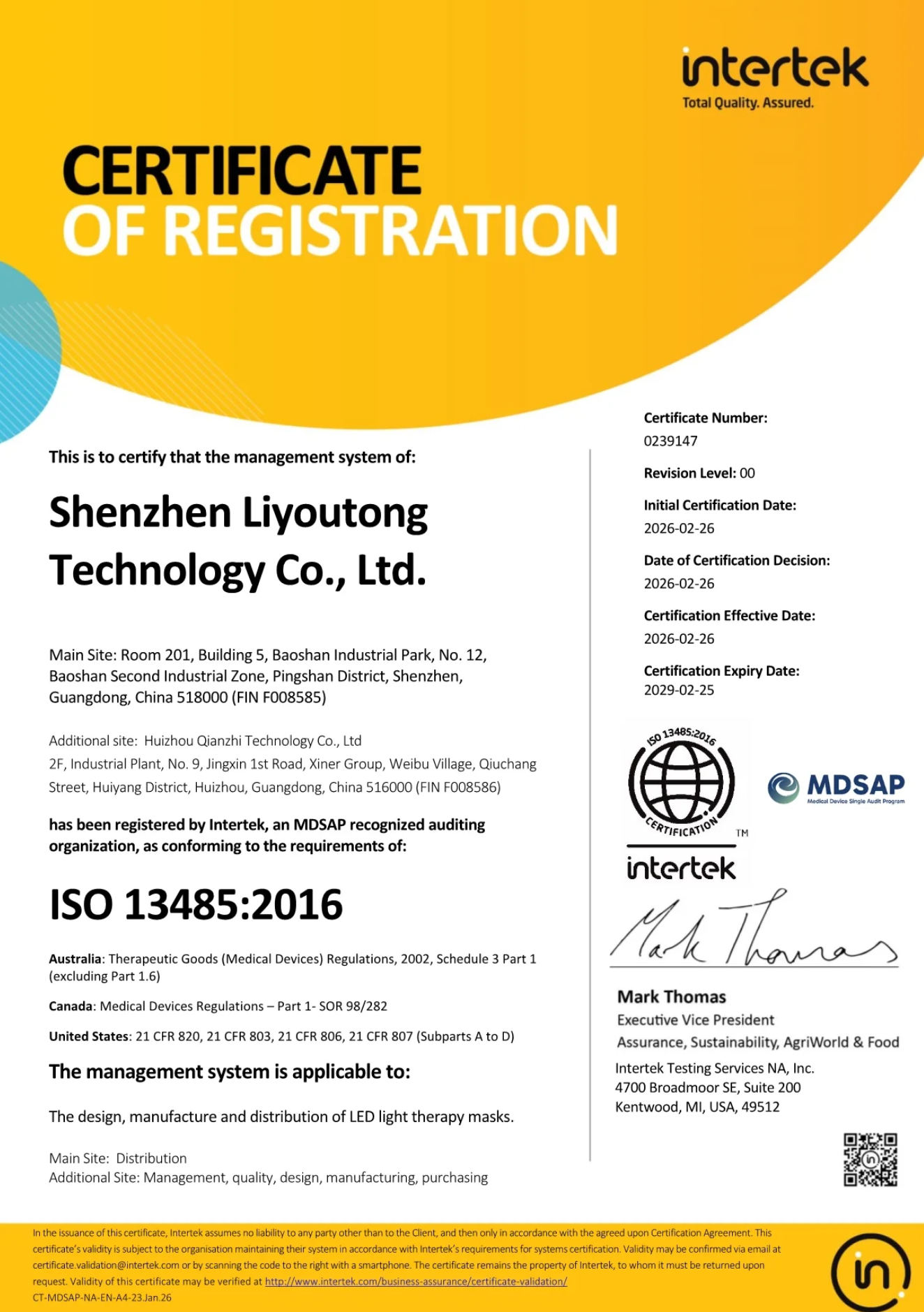
Do not take a manufacturer word for it. Ask for copies of their certification documents and check the issue and expiry dates. Cross-reference the certificate number with the issuing body database when possible. A factory that hesitates to share documentation is usually hiding something.