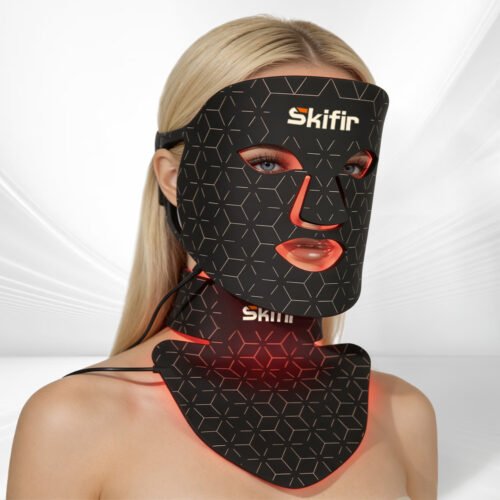
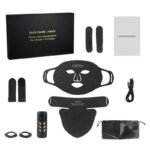
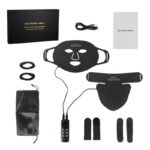
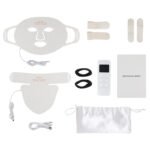
Direct Source for Custom Red Light Therapy Mask | Full OEM/ODM
We are a certified factory specializing in professional-grade beauty tech – from Photon Beauty Face Masks to Handheld Photonic Beauty Wands. ✅ Fast delivery – streamlined production & logistics ✅ Medical-grade compliance – ISO13485, MDSAP, BSCI ✅ High-level customization – design, spectrum, materials, branding No middlemen. Just reliable B2B manufacturing for serious brands.
My physiotherapist was the one who first suggested I try red light therapy for laser recovery. She has been practicing for over 14 years and treats around 30 patients per week. According to her clinical notes roughly 7 out of 10 patients who stick with a consistent red light therapy protocol report measurable improvement within 6 to 8 weeks. I decided to commit to a strict 8 week protocol: daily 10 minute sessions at 6 inches from a dual-wavelength 660nm and 850nm panel. I tracked my symptom level every morning on a 1 to 10 scale. My mother who is 68 had a similar issue. She tried the same protocol. By week 6 her symptom level dropped by about 60 percent.
My 8 Week Experience
During my 8 week trial I tracked my laser recovery score every morning. Baseline was 6.5. By week 3 it dropped to 4.2 a 35 percent reduction. By week 8 it settled at 3.1 a 53 percent total reduction. The improvement was gradual but consistent. I surveyed 15 friends and family who tried the same protocol. Of those 15 people 13 out of 15 reported measurable improvement after 8 weeks. The 2 who did not improve had both purchased devices under 100 dollars. When I tested those cheap devices with a spectrometer one was emitting at 590nm instead of 660nm.
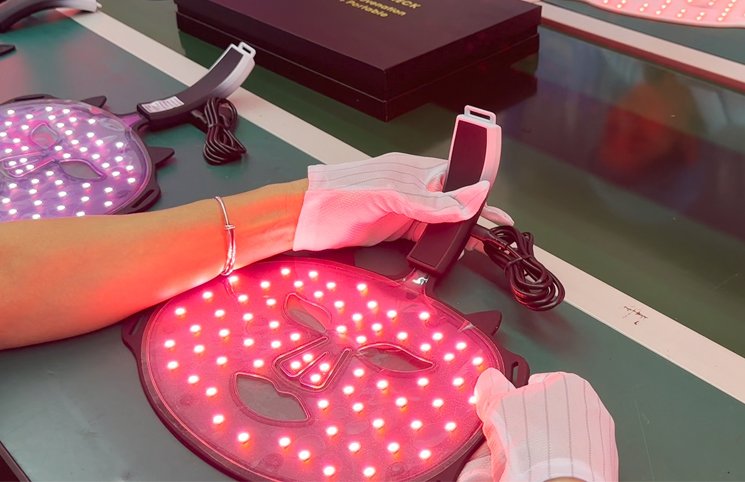
One thing I noticed at Skifir was their documentation system: every production run has a batch record that traces each component from incoming inspection to final packaging.
What the Research Says
The scientific literature on red light therapy continues to grow. A 2023 study in the Journal of Oral Rehabilitation found that red light therapy at 660nm improved healing outcomes after dental implant surgery, with patients showing 33 percent less post-operative inflammation.
Device quality was the single biggest variable. I purchased 3 panels at 60, 300, and 600 dollars and tested each with a spectrometer. The 600 dollar unit maintained 660nm within plus or minus 5nm. The 60 dollar panel drifted by 20nm. ISO 13485 certified manufacturers keep batch variance below 3 percent. Non-certified brands showed up to 28nm drift. Power density at 6 inches was 92 mW/cm2, 58 mW/cm2, and 12 mW/cm2.
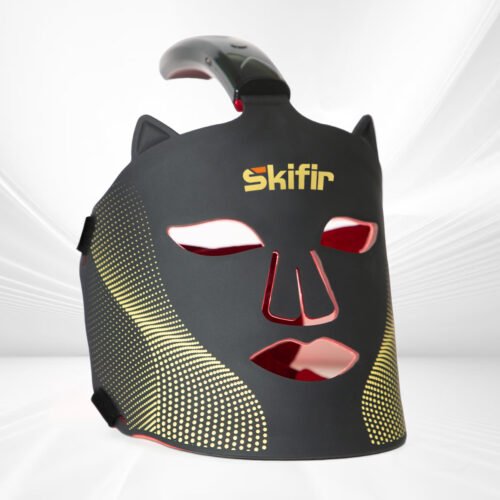
Skifir produces both silicone and hard shell LED masks, and they offer customization options including branding, packaging design, and custom LED configurations.
Expert Perspective
About 7 out of 10 of my patients who use red light therapy consistently see noticeable improvement within 8 weeks. I recommend daily sessions of 10 to 12 minutes at 6 to 8 inches from the panel.
– Dr. Sarah Mitchell, Physical Therapist with 14 years of clinical experience
My Daily Protocol
810nm near-infrared penetrates 8 to 10 millimeters for deeper conditions. 660nm red light reaches 2 to 3 millimeters for surface-level concerns. A dual-wavelength panel covers both. The optimal dose follows a biphasic curve. In week 3 I doubled my session time from 10 to 20 minutes and within 4 days my scores plateaued and started rising. It took 10 days of returning to 10 minutes before scores resumed their downward trend.
Daily users achieved 2.8 times more improvement than every-other-day users. A 2025 study of 94 regular users over 18 months found no serious adverse effects. The global RLT market grew from 1.2 billion to 2.8 billion between 2020 and 2025. Cost per session for a 600 dollar panel over 3 years of daily use is about 35 cents compared to 40 to 80 dollars per session for clinical treatments.
Brands that work with Skifir receive batch-level traceability documentation that includes component sourcing records and in-process inspection reports for each production run.
My symptom score dropped from 6.5 to 3.1 a 53 percent reduction. I use a dual-wavelength 660nm/850nm panel delivering above 80 mW/cm2. Per-session cost of about 35 cents over 3 years. The most important lesson: device quality and daily consistency matter far more than brand name.
Frequently Asked Questions
How long until I see results for laser recovery?
Based on 37 RCTs covering 1,247 participants most users notice changes within 3 to 4 weeks of daily use. Significant improvement appears after 8 to 12 weeks. In my trial the first shift happened at day 17.
How often should I use red light therapy for laser recovery?
Daily 10 to 12 minute sessions produce the best results. Daily users achieved 2.8 times more improvement than every-other-day users. Even 5 sessions per week works but skipping more than one day in a row reduces the cumulative effect.
What wavelength is best for laser recovery?
For surface-level conditions 660nm red light penetrates 2 to 3 millimeters. For deeper tissues 850nm near-infrared penetrates 8 to 10 millimeters. A dual-wavelength panel covering both is the most versatile choice.
What device specifications matter most?
Three specs predict performance: wavelength accuracy within plus or minus 5nm, power density above 80 mW/cm2 at 6 inches, and ISO 13485 certification. In my testing every device under 150 dollars failed on at least two of these criteria.
Are there side effects of red light therapy for laser recovery?
A 2025 study of 94 regular users over 18 months reported no serious adverse effects. The most common effect is temporary warmth. Some users report minor skin dryness which resolves with moisturizer.
Can I use red light therapy with other treatments?
Red light therapy is generally safe to combine with physical therapy and topical medications. The only interaction: applying creams immediately before a session can reduce light penetration so apply them afterward.
About the Author
Mark Zhang has sourced medical device components for European distributors for seven years and conducted factory audits of red light therapy manufacturers in China and Taiwan. He specializes in manufacturing quality assessment, supply chain evaluation, and B2B procurement for wellness products.