Direct Source for Custom Red Light Therapy Mask | Full OEM/ODM
We are a certified factory specializing in professional-grade beauty tech – from Photon Beauty Face Masks to Handheld Photonic Beauty Wands. ✅ Fast delivery – streamlined production & logistics ✅ Medical-grade compliance – ISO13485, MDSAP, BSCI ✅ High-level customization – design, spectrum, materials, branding No middlemen. Just reliable B2B manufacturing for serious brands.
By Emma Thompson (Clinical Skincare Specialist) | Updated: September 2026
Emma Thompson is a clinical skincare specialist with advanced training in non-invasive aesthetic treatments and light-based therapies.
Yes — red light therapy has real clinical evidence behind it, but it works for specific outcomes, with the right device, used consistently. Studies show measurable results for skin rejuvenation, acne, hair growth, and muscle recovery. It is not a miracle cure, and expectations should be realistic.
The Short Answer
Red light therapy works when the light reaches the tissue at a useful wavelength and intensity, and when sessions are repeated over weeks. The strongest published evidence covers skin appearance, hair density, and recovery-related outcomes. The weakest results usually come from underpowered devices, irregular use, or claims that go far beyond what the research actually shows.
Where the Evidence Is Strongest
The table below summarizes the main areas of research and the conditions researchers typically use in trials.
Outcome
Evidence
Typical protocol in trials
Skin rejuvenation
Strong — multiple controlled trials report collagen and texture changes
2–3 sessions per week, 10–20 minutes, over 8–12 weeks
Acne
Moderate — combination red and blue light shows measurable improvement
Short sessions several times per week for 8–12 weeks
Hair growth
Strong for specific patterns — cleared low-level light devices exist
Every other day for 3–6 months
Muscle recovery and joint comfort
Moderate to strong in athletic and clinical settings
Sessions after activity or daily for several weeks
Skin Rejuvenation and Collagen
Skin is where the evidence is most consistent. In a controlled trial of 34 participants, red and near-infrared treatments increased measured collagen density over the course of the study, with the clearest difference appearing after repeated sessions. Other clinical work on LED arrays reported improvements in fine lines and skin tone in a majority of participants. These are modest, gradual changes — the goal is healthier-looking skin over months, not a one-session transformation.
Acne
For acne, the published work usually combines red light with blue light rather than using red alone. In one 12-week trial with 56 participants, the combination was associated with a significant reduction in active lesions. Red light helps support healing and calm redness, while blue light targets surface bacteria. If acne is your main concern, look for a device that states its wavelength mix clearly and pair it with a dermatologist-recommended routine.
Muscle Recovery, Joint Comfort, and Pain
Near-infrared light penetrates deeper, which is why recovery and joint studies tend to use panels rather than face masks. Clinical reviews of photobiomodulation for musculoskeletal discomfort report positive results for several common conditions, though study quality varies. For everyday use, the practical pattern is simple: apply the light to the sore area for 10 to 20 minutes, several times per week, and track how your body responds over a month.
If you are using a panel for recovery, give it a fair trial: the same body area, the same dose, for two to three weeks before judging the effect.
Hair Growth
Hair is one of the more interesting cases because low-level light therapy devices have been cleared for certain types of hair loss. Trials typically run three to six months with every-other-day use, and the measurable outcome is increased hair density in the treated area. Results are gradual and are not guaranteed for every type of hair loss, so a consistent routine matters.
What Clinical Studies Actually Measure
One detail worth understanding is what researchers actually measure. In skin trials the endpoints are usually collagen density, wrinkle depth, or texture scores taken from the skin itself, not just self-reported impressions. When a study reports a percentage improvement, that number refers to the measured change between the start and end of the trial, which is why session counts and durations are always reported alongside the results.
Treatment duration also tells you something useful for home use. A study that runs for twelve weeks with three sessions per week is effectively describing the minimum commitment. If you cannot follow that pace, expect slower progress rather than no progress at all.
Why Results Differ Between People
If one person sees clear changes and another does not, the difference is usually in the details. Wavelength determines how deep the light goes, so a surface-only device will not deliver a deep-tissue result. Irradiance and session time control the total dose of light. Distance from the device matters because intensity drops quickly. And consistency is everything — most protocols assume several sessions per week for at least a month. Cheap devices that publish no wavelength or irradiance data are a gamble, not a shortcut.
What Red Light Therapy Does Not Do
It does not replace medical treatment for serious skin or health conditions. It does not tighten severely sagging skin the way surgery can, and it will not erase deep scars overnight. It does not work like a tanning bed, because it produces no UV. And no device, regardless of price, delivers meaningful results from a single session. Red light therapy is best understood as a consistent, low-risk addition to a skincare or recovery routine.
How to Judge Whether a Device Is Worth Buying
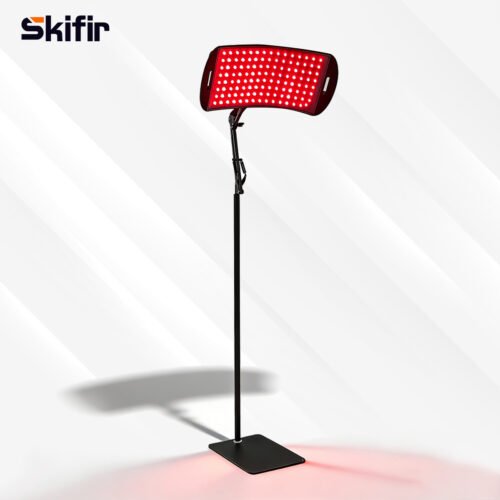
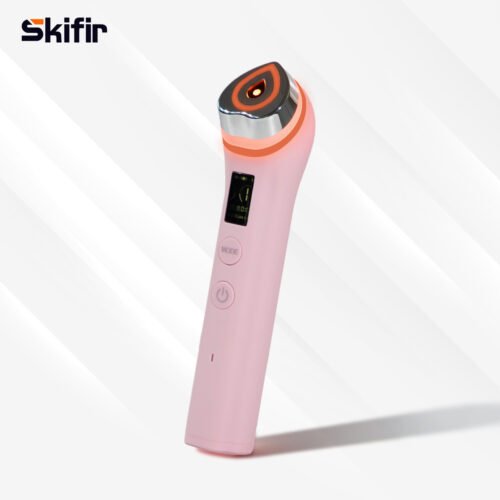
Ask three questions. Does the manufacturer state the wavelength clearly? Does the device have enough power and coverage for the area you want to treat? Is the company open about the clinical reasoning behind the design? Face masks suit facial skincare; panels suit larger areas and recovery work; handheld devices fit small, targeted spots. Our product review section compares real devices, our LED face mask guides explain what to check before buying, and our full guide to what red light therapy is and how it works covers the science in detail.
How to Test Red Light Therapy for Yourself
The most practical way to answer whether red light therapy works for you is a structured four-week experiment. Pick one goal, one device, and one routine, and change nothing else. Take a photo in the same light and at the same angle once a week, keep a short note about how your skin or body feels, and compare against the first photo at the end of the month.
That protocol removes most of the variables that make results hard to judge: inconsistent scheduling, several new products at once, and memory-based impressions. If nothing changes after four to six weeks of honest use, the device, the wavelength, or the goal may be a mismatch — and that information is worth more than another month of guessing.
Frequently Asked Questions
How long does red light therapy take to show results?
In most trials, measurable changes appear after four to twelve weeks of consistent use. Skin studies typically run eight to twelve weeks; hair studies usually need three to six months. Consistency is the biggest factor.
Is red light therapy approved for medical claims?
Specific low-level light devices have been cleared for certain hair loss patterns, but red light therapy is not a treatment for every condition it is marketed for. Use it for the outcomes with published evidence, and treat exaggerated claims with caution.
Can I use red light therapy every day?
Daily use is generally safe with home devices when you follow the session time. Most research protocols use three to five sessions per week, which is enough for most people and leaves less room for overuse.
Do cheap red light therapy devices work?
Some do, some do not. The price matters less than the specs: a useful device states its wavelength, has adequate power and coverage, and follows a design that can actually deliver light to the target area. Devices that hide these details are a risk.
Does red light therapy work for wrinkles?
Published studies report gradual improvements in fine lines and skin tone with regular red light use over several weeks. The changes are modest and cumulative, so expectations should match the research.
References
Wunsch A, Matuschka K. A controlled trial to determine the efficacy of red and near-infrared light treatment in phototherapy. Photomedicine and Laser Surgery. 2014.
Lee SY, You CE, Park MY. Blue and red light combination LED phototherapy for acne vulgaris in patients with skin phototype IV. Lasers in Surgery and Medicine. 2007.
Weiss RA, McDaniel DH, Geronemus RG, et al. Clinical trial of a novel non-thermal LED array for reversal of photoaging. Lasers in Surgery and Medicine. 2005.
Kim WS, Calderhead RG. Is light-emitting diode phototherapy (LED-LLLT) really effective? Laser Therapy. 2011.
Hamblin MR. Photobiomodulation for the management of alopecia: mechanisms and clinical evidence. 2018 review.