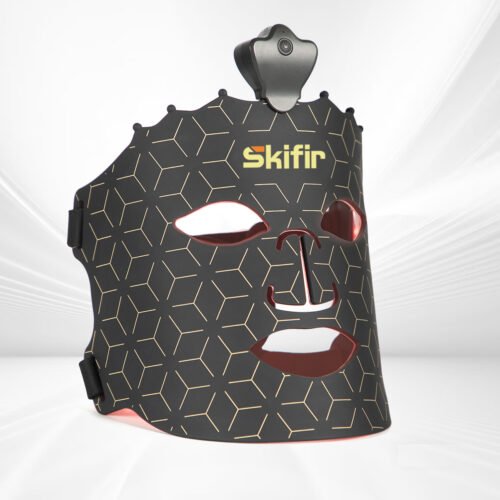
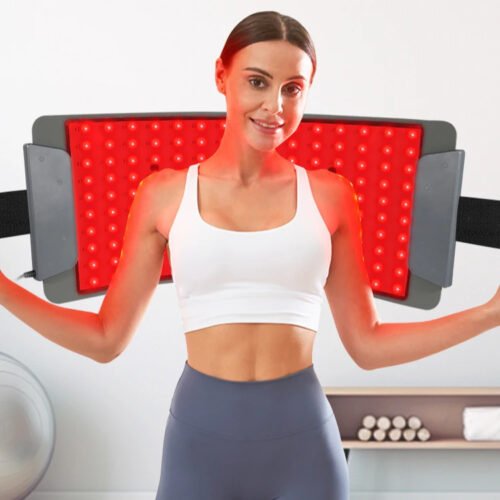
Direct Source for Custom Red Light Therapy Mask | Full OEM/ODM
We are a certified factory specializing in professional-grade beauty tech – from Photon Beauty Face Masks to Handheld Photonic Beauty Wands. ✅ Fast delivery – streamlined production & logistics ✅ Medical-grade compliance – ISO13485, MDSAP, BSCI ✅ High-level customization – design, spectrum, materials, branding No middlemen. Just reliable B2B manufacturing for serious brands.
By David Chen (Biomedical Researcher) | Updated: September 2026
David Chen holds a Master of Science in Biomedical Engineering and has spent the past decade reviewing photobiomodulation research and LED device design for clinical and consumer applications.
Red light therapy is a non-invasive treatment that uses low-level red and near-infrared light, typically at 630–660 nm and 810–850 nm, to support the skin and deeper tissue. Unlike UV light, it does not burn or tan the skin. Researchers call the underlying process photobiomodulation, and published trials have examined it for skin tone, fine lines, acne, muscle recovery, and joint comfort.
What Is Red Light Therapy?
Red light therapy delivers specific wavelengths of light to the body through LED panels, face masks, handheld devices, and full-body systems. The red band (630–660 nm) works mainly on the surface layers of the skin, while near-infrared light (810–850 nm) penetrates deeper into muscle, joints, and other tissue.
The treatment is sometimes called low-level light therapy (LLLT) or photobiomodulation (PBM). All three terms describe the same idea: cells absorb light energy and use it to support natural repair processes. Sessions are typically short — often 10 to 20 minutes — and the light is gentle enough for repeated home use.
The science goes back further than most people expect. Researchers first studied light-based tissue effects with lasers in the 1960s, but lasers were expensive and impractical for home care. The shift happened when light-emitting diodes made the relevant wavelengths affordable and safe enough for consumer devices. That is why today you can buy an LED face mask or a therapy panel for home use, whereas the same kind of treatment once required a clinic appointment.
How Red Light Therapy Works Inside Your Cells
Inside the body, red and near-infrared light is absorbed by mitochondria, the energy centers of cells. A key enzyme called cytochrome c oxidase responds to light in this range, which supports the production of ATP, the molecule cells use for energy. With more available energy, skin cells can produce collagen more efficiently, and blood flow to the treated area improves.
That chain of events is why red light therapy is studied for so many different outcomes. Collagen support benefits skin firmness and fine lines. Improved circulation helps with recovery. Lower oxidative stress in treated tissue may explain why some people with joint discomfort report relief. None of this happens overnight — it depends on consistent sessions over several weeks.
Red vs. Near-Infrared: What Each Wavelength Does
Wavelength is the most important spec on any red light therapy device, because it controls how deeply the light penetrates. The table below summarizes the two main bands used in consumer devices.
Wavelength band
Approximate depth
Commonly targeted
Red 630–660 nm
Surface to about 2–3 mm
Skin tone, fine lines, facial masks, acne support
Near-infrared 810–850 nm
Up to about 5–10 mm
Muscle recovery, joints, scalp, deeper tissue
Combined red + NIR
Surface plus deeper tissue
All-round home panels and full-body systems
What Red Light Therapy Is Used For
Skin health — clinical trials report improved collagen density, smoother texture, and reduced redness with regular use.
Acne — red and blue light combinations have been studied for calming breakouts and supporting clearer skin.
Hair — low-level light devices cleared for certain types of hair loss support thicker, fuller growth over months of consistent use.
Recovery and comfort — athletes and active adults use red light panels to ease muscle soreness and joint discomfort.
Everyday wellness — many users simply prefer a calming, low-effort ritual that fits into an evening routine.
In practice, the people who get the most value tend to be consistent rather than desperate for overnight change: anyone with a skincare routine who wants to add a maintenance step, athletes managing everyday soreness, and adults who prefer drug-free options for joint comfort. Red light therapy rarely produces dramatic before-and-after photos after a week, but it is one of the few home treatments where gradual, measurable changes are backed by published trials.
What a Typical Home Session Looks Like
A common protocol is three to five sessions per week for 10 to 20 minutes per area. For a face mask, you wear the device and let the LEDs sit close to the skin. For a panel, you sit or stand about 15 to 30 cm away so the light covers the target area evenly. Most devices include a timer, which makes consistency easier to build into a routine.
Results are cumulative. In one 2014 controlled trial, 34 participants used red and near-infrared light over a series of sessions and showed measurably higher collagen density by the end of the study period. In practice, most people report the clearest changes after four to eight weeks of steady use, not after the first session.
Is Red Light Therapy Safe?
Red light therapy is generally considered safe for home use when the device is used as directed. It produces no UV, so it does not burn or tan the skin. The main cautions are straightforward: avoid looking directly into the light, follow the recommended session time, and skip treatment over open wounds or if you are using photosensitizing medication. If you are pregnant or managing a medical condition, check with a clinician before starting.
How to Choose a Red Light Therapy Device
Start with the wavelength, not the price tag. Look for devices that state their wavelength band clearly, because that determines what the light can realistically reach. Then check coverage: a face mask targets the face, while a panel treats larger areas such as the neck, back, or joints. Power output and irradiance matter too — a device that is too weak simply takes longer to deliver results. For buying comparisons, browse our LED face mask guides and product review section, or work through the full red light therapy article library to match a protocol to your goal.
Common Misconceptions
Myth: red light therapy is basically a hot lamp. It is not. The useful wavelengths produce little heat, and the effects come from light absorption, not warmth. If a device feels hot enough to be uncomfortable, that is a design problem, not a feature.
Myth: more power is always better. Power matters up to a point, but irradiance, wavelength accuracy, and session time together determine the dose your tissue actually receives. A very bright device aimed at the wrong wavelength is still the wrong device.
Myth: one session proves whether it works. No credible study shows permanent change from a single use. Anyone promising one-time results is describing marketing, not the research.
Frequently Asked Questions
Is red light therapy the same as tanning?
No. Tanning uses UV light, which damages the skin. Red light therapy uses low-level red and near-infrared wavelengths that do not burn or tan, and it is not associated with UV-related skin damage.
How often should I use red light therapy?
Most home protocols recommend three to five sessions per week for 10 to 20 minutes per area. Consistency over several weeks matters more than doing very long sessions in a single day.
Can I use red light therapy with my skincare routine?
Yes. Red light therapy is commonly combined with cleansers, serums, and moisturizers. Apply the light first on clean, dry skin, then follow with your normal products. Avoid photosensitizing ingredients unless your clinician approves them.
Does red light therapy hurt?
No. The light produces a mild warmth at most. It is not painful, and most devices can be used comfortably at home while you read or relax.
What wavelengths should a home device have?
For general skin care and facial use, look for red light around 630–660 nm. If you also want deeper recovery benefits, choose a device that adds near-infrared at 810–850 nm.
References
Hamblin MR. Mechanisms and applications of the anti-inflammatory effects of photobiomodulation. AIMS Biophysics. 2017.
Wunsch A, Matuschka K. A controlled trial to determine the efficacy of red and near-infrared light treatment in phototherapy. Photomedicine and Laser Surgery. 2014.
Weiss RA, McDaniel DH, Geronemus RG, et al. Clinical trial of a novel non-thermal LED array for reversal of photoaging. Lasers in Surgery and Medicine. 2005.
Barolet D. Light-emitting diodes in dermatology: an update on cellular mechanisms and clinical applications. Seminars in Cutaneous Medicine and Surgery. 2008.